
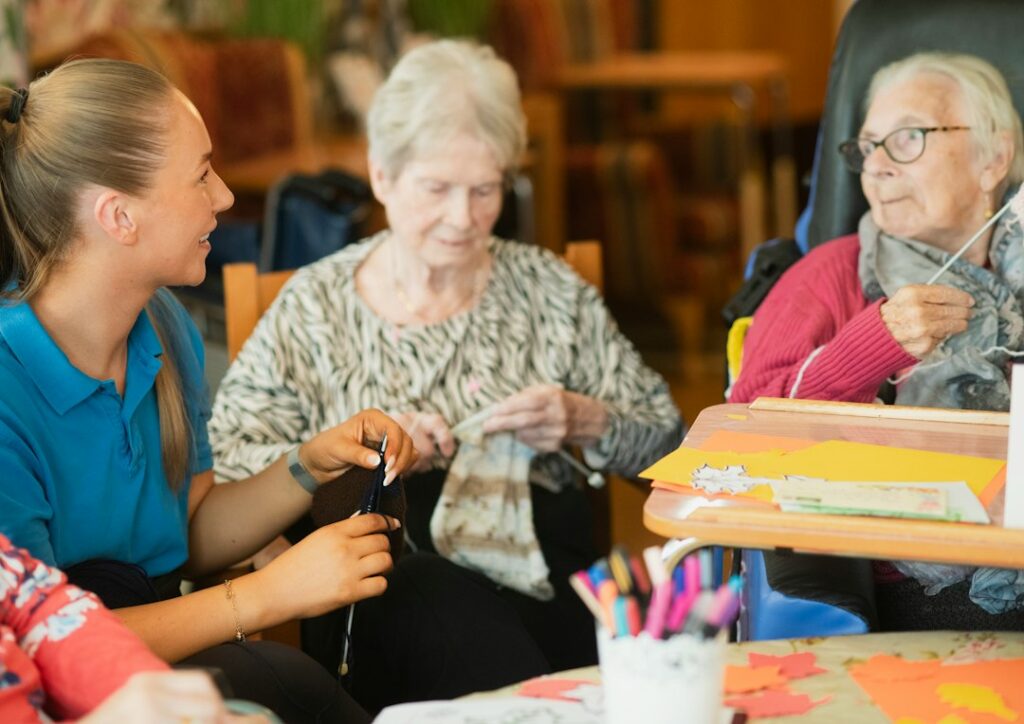
Intergenerational activities bring older adults and younger people together for shared experiences, conversation, learning, and creativity. In assisted living, these activities can support emotional well-being, mental stimulation, physical engagement, and a stronger sense of connection to the wider community.
For residents of Forest Hills, PA, intergenerational programs may be especially meaningful during seasons when cold weather, snow, or shorter daylight hours make spontaneous visits and outdoor activities less convenient. Planned gatherings can help maintain social connection while giving people of different ages a reason to spend time together.
What are intergenerational activities?
Intergenerational activities are organized experiences involving people from different age groups. In assisted living, participants may include residents, children, teenagers, young adults, families, educators, volunteers, or community groups.
Examples include:
- Reading together or sharing stories
- Arts and crafts projects
- Board games, puzzles, and card games
- Gardening and indoor plant care
- Music, singing, or simple dance activities
- Technology lessons led by younger participants
- Cooking demonstrations and recipe exchanges
- History or local-memory projects
- Holiday decorating and seasonal celebrations
- Joint exercise, stretching, or movement sessions
The purpose is not simply to entertain residents. Well-planned activities create opportunities for mutual participation, where each age group contributes something valuable.
How do these activities benefit assisted living residents?
The most consistent benefit is increased social connection. Regular interaction with younger people can give residents more opportunities to talk, laugh, share memories, and feel involved in everyday life outside the assisted living setting.
Intergenerational contact may also help reduce loneliness. A resident who has limited visits from relatives may appreciate a conversation with a student, young volunteer, or family group. Even a short, respectful interaction can provide anticipation and structure to the day.
Other potential benefits include:
- Improved mood: Positive social experiences may ease boredom, sadness, or feelings of isolation.
- Mental stimulation: Games, storytelling, problem-solving, and conversation encourage attention and memory use.
- A stronger sense of purpose: Residents can teach skills, explain traditions, give advice, or share personal history.
- More varied routines: Visits and shared projects create meaningful changes in the daily schedule.
- Greater confidence: Residents may feel valued when their knowledge, creativity, or life experience is sought out.
- Physical engagement: Gardening, crafts, movement sessions, and games can encourage safe activity.
These benefits are not automatic. Activities work best when residents can participate at their own pace and are treated as contributors rather than passive recipients.
Can intergenerational programs help people with memory loss?
They can, although the activity must be adapted to the individual. People living with dementia or other forms of memory loss may respond well to music, familiar objects, simple crafts, food traditions, and brief conversations about earlier life experiences.
A successful activity usually has clear steps and limited distractions. For example, decorating cookies, sorting large buttons by color, folding towels, or singing familiar songs may be easier than a complicated group project.
Younger participants should receive basic guidance before taking part. They may need reminders to speak clearly, allow extra response time, avoid correcting every mistake, and focus on the person rather than the diagnosis.
The goal is not to test memory. It is to create a comfortable shared experience. A resident does not need to remember a visitor’s name or complete every task to benefit from being included.
What do younger participants gain?
Intergenerational activities benefit younger people as well. Spending time with older adults can help children and teenagers develop patience, listening skills, empathy, and confidence in communicating with people from different generations.
Younger participants may also gain a more realistic understanding of aging. Direct contact can challenge stereotypes that older adults are disconnected, unable to learn, or interested only in the past. Residents may enjoy current music, technology, games, humor, and new ideas just as younger people do.
Older adults often provide knowledge that is difficult to learn from a textbook. They can explain how families managed during earlier economic periods, describe changes in work and household life, or share practical skills such as sewing, gardening, cooking, or woodworking.
These conversations can also help younger people understand family history and community change in a personal way.
Which activities work best?
The strongest activities are simple, flexible, and based on shared interests. They should not depend on speed, perfect hearing, strong eyesight, or extensive mobility.

Good program planning considers:
- Group size and noise level
- Seating and wheelchair access
- Lighting and glare
- Restroom access
- Allergies and dietary restrictions
- Infection-control procedures
- Seasonal weather and transportation conditions
- Availability of quiet spaces
- Different attention spans and energy levels
A craft project might include pre-cut materials and larger tools. A game may need simplified rules. A music session should allow residents to listen if singing or movement is uncomfortable.
Activities should also avoid treating children as entertainers and residents as an audience. Shared decision-making is more respectful. Residents might select songs, teach a game, choose a recipe, or help decide the theme of a project.
How can families support meaningful participation?
Families can help by asking residents what kinds of activities they enjoy rather than assuming what they would like. Some people prefer one-on-one visits, while others enjoy small groups. Some may want to teach, while others would rather watch, listen, or participate quietly.
A family member can prepare a child or teenager by explaining that older adults may speak slowly, use mobility equipment, repeat stories, or need breaks. Children should be encouraged to show courtesy without being expected to act unnaturally formal.
Short visits are often more successful than long ones. A focused activity lasting 20 to 45 minutes may be easier to enjoy than an unstructured visit with no clear purpose.
Families should also watch for signs of fatigue, frustration, or overstimulation. Ending an activity while it is still going well can make future participation more appealing.
What are common misconceptions?
One misconception is that intergenerational activities are mainly for children. In reality, the most effective programs recognize that older adults have interests, preferences, and abilities that should shape the experience.
Another misconception is that every resident wants frequent social interaction. Some residents may find large groups tiring or stressful. Participation should be voluntary, and alternatives should be available.
It is also a mistake to assume that physical limitations prevent meaningful participation. Residents with limited mobility may still enjoy storytelling, music, conversation, art, observing demonstrations, or helping younger participants make choices.
Finally, intergenerational activities do not have to be elaborate. A resident showing a child how to play a familiar card game or discussing an old family recipe may be more meaningful than a highly planned event.
How can assisted living communities make these programs sustainable?
Consistency matters more than occasional large events. A small monthly gathering may create stronger relationships than a single annual celebration. Programs also benefit from keeping notes about residents’ interests, communication needs, and preferred activities.
A balanced schedule can include both indoor and outdoor options. During warmer months, gardening, walking conversations, and shaded outdoor gatherings may be practical. During colder months, indoor music, crafts, cooking discussions, and technology-sharing activities can maintain connection without requiring difficult travel.
With thoughtful planning, intergenerational activities can become a regular part of assisted living life. They support residents’ identities, give younger people meaningful opportunities to learn, and strengthen the everyday relationships that help a community feel connected.
