
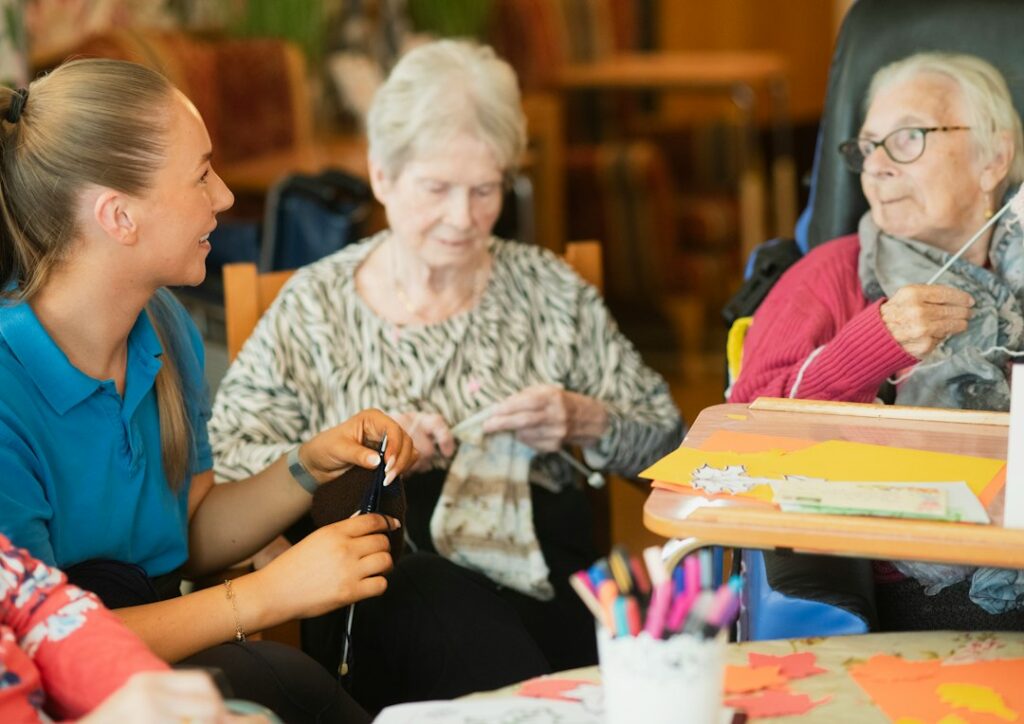
Creative hobbies can help seniors in assisted living stay engaged, express personal interests, and maintain a sense of purpose. Activities such as painting, music, gardening, writing, crafts, and photography can be adapted for different abilities, energy levels, and living arrangements.
For residents of Forest Hills, PA, creative activities can also provide a meaningful way to connect with neighbors, enjoy seasonal changes, and continue familiar traditions without requiring extensive space or complicated equipment.
What creative hobbies work well in assisted living?
The most suitable hobbies are enjoyable, flexible, and easy to modify. Activities should allow residents to participate while seated, work at their own pace, and choose how much effort they want to give on a particular day.
Good options include:
- Watercolor painting, coloring, and simple drawing
- Knitting, crocheting, sewing, and fabric crafts
- Music listening, singing, and playing familiar instruments
- Journaling, poetry, storytelling, and letter writing
- Container gardening and arranging flowers
- Photography and photo organization
- Cooking-related projects that do not require unsafe equipment
- Collage-making, seasonal decorations, and memory boxes
The goal is not to produce perfect artwork. Creative hobbies are most valuable when they provide enjoyment, conversation, self-expression, or a satisfying sense of completion.
How can painting and drawing be adapted for older adults?
Painting and drawing can be adjusted for changes in vision, hand strength, coordination, or concentration. Larger brushes, thick-handled pencils, washable markers, and high-contrast paper may be easier to control than traditional small tools.
Residents may enjoy painting:
- Landscapes remembered from earlier stages of life
- Flowers, trees, birds, or seasonal scenes
- Simple geometric patterns
- Greeting cards for family members
- Abstract shapes based on music or mood
Water-based paints are generally easier to clean than oil-based materials. Table coverings, aprons, and containers with secure lids can reduce spills. For people with limited hand movement, a staff member, family member, or fellow resident can help prepare materials while the participant makes the creative choices.
Coloring remains a useful activity for adults, especially when pages are printed with large shapes and clear lines. It should not be treated as a childish pastime. Many adults find repetitive coloring calming and appreciate being able to complete a project in a short session.
Are music activities helpful for residents with memory loss?
Music can be especially meaningful for people living with memory changes because familiar songs may remain recognizable even when other forms of recall become difficult. Singing, rhythm instruments, and guided listening can encourage participation without requiring residents to remember instructions or produce a finished object.
Useful music activities include:
- Singing familiar songs from different decades
- Listening to music connected to personal memories
- Tapping rhythm sticks or small hand instruments
- Creating a shared playlist based on residents’ preferences
- Discussing concerts, dances, or musical traditions from the past
- Watching performances and responding through movement or conversation
Music activities should reflect individual preferences. A song that comforts one person may irritate another, particularly if the volume is too high or the selection feels unfamiliar. Offering choices and keeping sound levels comfortable helps make the activity more welcoming.
What crafts are easiest for seniors with limited dexterity?
Crafts that use large materials, simple steps, and minimal pressure are often easiest for residents with arthritis or reduced grip strength. Adaptive scissors, foam handles, pre-cut shapes, and lightweight supplies can make participation more comfortable.
Examples include:
- Paper collages
- Seasonal wreaths made from soft materials
- Decorating wooden or cardboard shapes
- Large-bead jewelry
- No-sew fleece projects
- Fabric sorting and simple textile arrangements
- Decorating envelopes or cards
- Creating bookmarks and small gift items
Residents do not need to complete an entire project independently. Sorting colors, choosing materials, placing pieces, or giving design suggestions are all valid forms of participation.
Instructions work best when presented one step at a time. Too many materials on the table can make a project feel confusing, especially for someone who becomes tired easily or has difficulty filtering visual information.
Can gardening be part of assisted living life?
Yes. Gardening does not require a large outdoor yard. Container gardening, indoor plants, herb pots, and flower arranging can bring many of the same sensory and creative benefits into a smaller living environment.
Raised planters or tabletop containers may be more accessible than ground-level beds. Residents can participate by:
- Planting seeds or seedlings
- Watering plants with a lightweight container
- Removing dry leaves
- Choosing flowers for a shared arrangement
- Decorating plant markers
- Observing changes in leaves, color, and growth
- Using herbs in simple food-related activities

Seasonal gardening can be particularly enjoyable in Forest Hills, where changing weather provides visible differences throughout the year. Indoor projects can continue during colder months, while spring and summer may allow more time with outdoor containers or supervised garden areas.
Safety matters. Floors should remain dry, pathways should stay clear, and plants should be selected carefully if residents or pets may accidentally touch or eat them. People with plant allergies may prefer observation, arranging artificial flowers, or working with sealed nature materials.
How can writing and storytelling support emotional well-being?
Writing gives residents a way to preserve memories, organize thoughts, and share experiences. It does not need to follow a formal writing style. Short entries, dictated stories, and recorded conversations can be just as meaningful as handwritten pages.
Possible prompts include:
- A favorite family tradition
- The first job or home a person remembers
- A treasured recipe
- A memorable school day
- Music that shaped a particular period of life
- A holiday that was celebrated differently in the past
- Advice for younger family members
- A place that felt especially peaceful
Residents who have difficulty writing may dictate their thoughts to someone else, use a voice recorder, or create a scrapbook with photographs and labels. Some may prefer private journaling, while others enjoy group storytelling. Permission should always be requested before sharing personal stories with others.
What should families consider when choosing a hobby?
The best activity is based on the resident’s interests, abilities, and current energy rather than age alone. A person who never enjoyed crafts may prefer music, puzzles, cooking memories, or photography. Someone who once gardened extensively may appreciate caring for one small plant instead of joining a large group project.
Families can ask:
- What activities did the person enjoy earlier in life?
- Does the activity require fine motor control, standing, or strong vision?
- Can it be completed in short sessions?
- Is the resident more comfortable alone or in a group?
- Could the materials create a choking, allergy, spill, or fall hazard?
- Can the activity be changed if interest or ability varies?
It is also helpful to focus on the process instead of the finished result. A resident may enjoy selecting colors, listening to music, or talking with others even if the project remains unfinished.
How can creative hobbies become social activities?
Creative hobbies naturally encourage conversation when they are organized around shared interests rather than competition. Residents might work on individual projects at the same table, exchange decorating ideas, or discuss the memories connected to a song, photograph, recipe, or holiday tradition.
Small groups are often easier for people who become overwhelmed by noise or activity. Quiet participation should be welcomed, and residents should not be pressured to perform, display their work, or explain personal choices.
A finished project may become a birthday card, room decoration, family keepsake, or seasonal display, but public sharing should remain optional. Creative time is most beneficial when residents retain control over what they make, how long they participate, and whether others see the result.
